
Schools involved
30+
The project
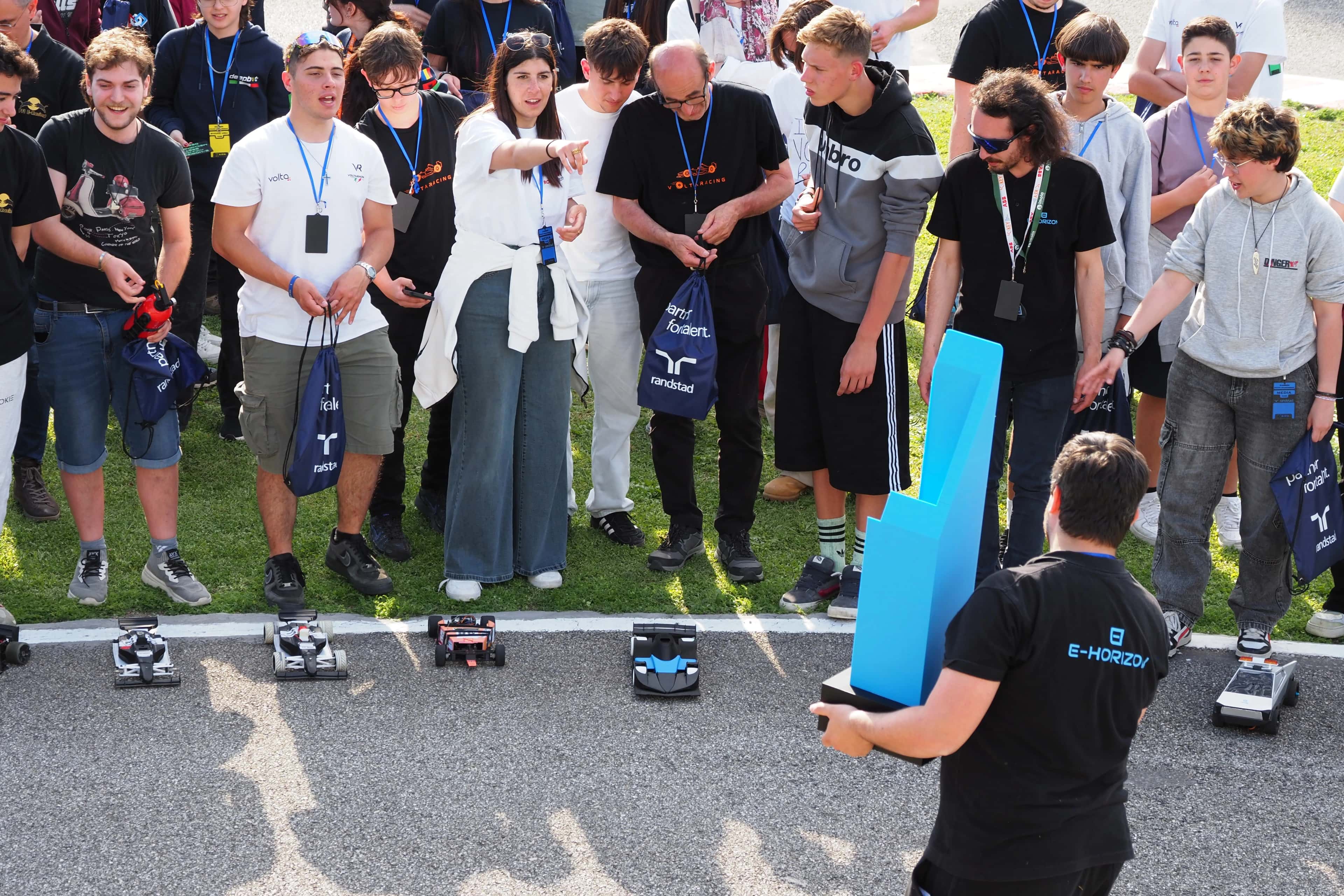
An educational championship where students, teachers and schools build an electric RC vehicle from scratch and race it through a complete technical, organisational and learning journey.
Why it exists
E-Horizon brings engineering, motorsport and applied learning into one shared journey. It is not an isolated workshop: every decision has real consequences for performance, organisation and communication.
Schools involved
30+
Students reached
500+
Connected skill areas
8+
In practice
A team does more than build a car: it designs, documents, coordinates people, follows regulations and presents its work to judges and the public.
Chassis, aerodynamics, powertrain, electronics and interfaces: every component is designed, tested and validated by the team.
Real roles, real responsibility and continuous communication make the project an exercise in collaboration as well as engineering.
Design choices must respect clear sporting and technical constraints, just as they do in a real competition.
Performance is not only on track: documentation, presentation and management also count in the final result.
For whom
The project is one, but the reason to join changes depending on who is looking at it. Each audience gets a clear route rather than generic information.
Students
Put CAD, electronics, communication, time management and problem-solving into practice on a real-world challenge.
Teachers
Use a project with objectives, roles, milestones and evidence that works across classroom and workshop learning.
Schools
The team connects different programmes and becomes a project that represents the institute in a concrete way.
Partners
Companies and sponsors support a tangible, shareable project that creates content, skills and a local presence.
Skills
The vehicle is only the visible centre of the project. Around it are engineering, logistics, costs, 3D printing, electronics, software, testing and communication.
Journey
Each phase has a clear purpose. This is not a single event, but a yearly pathway with progressive development.
Phase 1
The school confirms participation, appoints a contact and defines operating roles: team leader, CTO, communications, driver and technical support.
Phase 2
The team develops chassis, aerodynamics, electronics and digital work through research, CAD, prototypes, testing and review.
Phase 3
Before racing, the team presents its technical project, management report and regulatory preparation to the judges.
Phase 4
The best teams meet at the final. The lasting value is the journey: skills, method, collaboration and turning theory into practice.
Team
The team is real, not symbolic. Every role carries concrete responsibility and skills that connect with the rest of the work.
Coordination
Communication
Solutions
Performance
The supervising teacher guides the pathway, while the educational value comes from students taking real responsibility and learning to manage problems, timing and decisions with support.
Competition
The project is not judged by the stopwatch alone. Technical work, presentation, management, reliability and respect for the regulations all matter.
The team explains the vehicle: design choices, constraints, iterations and technical reasoning are assessed by the judges.
This area considers budget, organisation, sponsors, work plan and the ability to hold the project together in the real world.
Qualifying, sprint, feature and endurance put the vehicle on track. Speed matters, but without reliability and method it is not enough.
Reports, simulations and analysis demonstrate method, data literacy and the ability to communicate technical work clearly.
Resources
A good start needs more than an idea: it needs tools, guides and support. The project provides resources that help teams and teachers work consistently.
Models, construction references and assets help the team develop the chassis and components with method.
Sheets, guides, explanations and supporting materials turn the project into a meaningful learning activity.
The school is not left alone: teams can access guidance for technical, organisational and operational questions.
Common questions
A complete project page should also answer the most common questions before they are asked.
No. The project is designed to guide a school from the basics to competition. Skills grow across the season and do not all need to be in place at the beginning.
It is a yearly journey, so it needs continuity rather than daily work. Regular team sessions, clear objectives and an involved teacher make it sustainable.
Students build and compete; teachers guide, supervise and connect the project to learning. Its value comes from combining student autonomy with educational direction.
No. Competition matters, but the heart of the project is designing, making mistakes, improving, documenting and working like a real technical team.
Start by speaking with the school, reading the regulations and then using the student or teacher page that best fits your role in the project.
Next step
This page gives the complete overview. The next concrete step is to involve your school, read the regulations and choose the route that matches your role.